

The Rubik’s Cube is not just a toy; it’s a brain-teasing puzzle that has captured the imagination of millions worldwide. With its colorful design and seemingly endless possibilities, this cube challenges problem-solving abilities, logical thinking, and patience. It has become a tool for education, a sport for speedcubers, and even a medium for creativity in art. Let’s dive deep into the world of the Rubik’s Cube, exploring its history, structure, benefits, solving techniques, and cultural impact.
History of the Rubik’s Cube
The cube was invented in the 1970s as a way to demonstrate three-dimensional movement and geometry. Initially created as a teaching tool, it soon gained popularity far beyond the classroom. By the 1980s, the cube became a global craze, and decades later, it continues to be one of the most recognized puzzles in history.
Understanding the Structure
The classic cube is a 3×3 structure with six colored faces. Each face has nine smaller squares, and the puzzle’s goal is to align all squares on each face to the same color.
Centers stay fixed and define the color of that face.
Edges have two colors.
Corners carry three colors.
This simple structure creates an astonishingly complex puzzle, with billions of possible arrangements.
Variants Beyond the Classic 3x3
While the 3×3 cube is the most common, many variations exist:
2×2 cubes for beginners.
4×4 and 5×5 cubes for advanced solvers.
Unique designs like pyramids, mirror cubes, and dodecahedron puzzles.
Each version brings new challenges and expands the puzzle’s versatility.
Why the Cube is More Than Just a Toy
The Rubik’s Cube isn’t only for fun—it’s a powerful educational and cognitive tool.
Boosts memory and focus: Solving algorithms requires recalling sequences.
Strengthens problem-solving: You learn to break down large problems into manageable steps.
Encourages patience and resilience: Success comes through persistence.
Mathematics Behind the Cube
The Rubik’s Cube is a brilliant example of mathematics in action.
Combinatorics: The 3×3 has more than 43 quintillion possible positions.
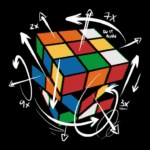
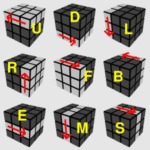
Algorithms: Solvers rely on sequences of moves that rearrange certain pieces without disrupting others.
This makes it both a playground for mathematicians and a practical lesson in logical sequencing.
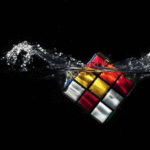
Step-by-Step Guide to Solving
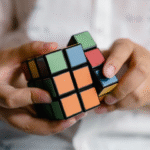
Learning to solve the cube is a journey in itself.
First Layer: Start with a cross and complete the corners.
Second Layer: Use algorithms to position the edges.
Final Layer: Solve orientation first, then permutation, to finish the cube.
Advanced Techniques and Speedcubing
Once you’ve mastered the basics, advanced methods await:
CFOP (Cross, F2L, OLL, PLL) – The most popular speed-solving method.
Roux Method – A block-building technique.
ZZ Method – Focuses on edge orientation early on.
Speedcubing isn’t just about solving—it’s about solving fast, often under 10 seconds with practice.
The World of Speedcubing
Speedcubing has evolved into a competitive sport. Enthusiasts train to improve finger dexterity, recognition speed, and efficiency. Official competitions attract participants from around the globe, with world records now under four seconds. Variants like one-handed solving and blindfolded solving push the limits of human skill.
Rubik’s Cube in Education
Educators integrate cubes into lessons to teach mathematics, algorithms, and critical thinking. They are also used to build teamwork in classrooms, as solving often requires step-by-step cooperation and peer guidance
Rubik’s Cube and Creativity
Beyond problem-solving, cubes have been used in art projects. Mosaics and sculptures created entirely from cubes showcase how logic and creativity can combine in unique and visually stunning ways
Life Lessons from the Cube
The Rubik’s Cube teaches us more than algorithms:
Patience: Every attempt brings progress.
Strategy: Random moves rarely work—planning is key.
Persistence: Even failure leads to learning.
Digital and Virtual Cubes
Today, apps and online simulators allow learners to practice virtually. These platforms offer tutorials, algorithm libraries, and timers for training, making learning more accessible than ever.
Future of the Cube
The Rubik’s Cube continues to evolve with innovations like smart cubes that track moves and provide instant feedback via mobile apps. As puzzles grow more advanced, the classic cube remains the ultimate challenge.
Finger Dexterity and Muscle Memory
Solving efficiently isn’t just mental—it’s physical. Speedcubers develop muscle memory through repetition, allowing them to execute sequences almost automatically.
The Rubik’s Cube is more than a colorful puzzle—it’s a tool for learning, creativity, and competition. It has stood the test of time, inspiring curiosity in classrooms, shaping sports through speedcubing, and sparking innovation in art. Whether you solve it slowly or race against the clock, the cube represents persistence, intelligence, and the joy of discovery.
FAQ's
1. How many possible positions does a 3x3 cube have?
It has more than 43 quintillion possible arrangements.
2. How long does it take to learn to solve the cube?
Beginners may take a few days or weeks, while mastering speed techniques can take months.
3. Can the cube help with learning?
Yes, it improves memory, focus, and logical thinking, making it popular in education.
4. What are some popular solving methods?
CFOP, Roux, and ZZ are among the most used advanced techniques.
5. Are there digital ways to practice?
Yes, apps and simulators let you solve virtually, track progress, and learn algorithms.
